

 blog
blogMost drain blockages don’t happen suddenly. They build up over weeks or months, one layer of grease, one clump of hair, one autumn’s worth of leaves at a time. By the time water backs up into a sink or a manhole lifts, the damage is already done.
Consistent drain maintenance breaks that cycle. It keeps pipes flowing freely, extends their working life, and saves you the cost of emergency call-outs. In Cornwall, where older clay pipe networks, high annual rainfall, and ground movement from granite and shillet rock add real stress to drainage systems, proactive maintenance matters more than the national average.
This guide covers the habits that make a genuine difference, the ones that don’t, why Cornwall properties need specific attention, and when DIY ends and professional help begins.
What Does Drain Maintenance Actually Involve?
Drain maintenance is the combination of daily habits, monthly checks, seasonal clears, and periodic professional inspections that keep a drainage system working the way it should. It covers everything from what goes down your kitchen sink to how often a qualified engineer inspects your underground pipework.
It’s worth separating maintenance into two layers:
- Preventive habits: What you do regularly to stop blockages forming in the first place (waste disposal discipline, drain guards, seasonal clears)
- Proactive inspections: Periodic professional checks that catch pipe deterioration, root ingress, or partial blockages before they become emergencies
Both layers matter. Good habits reduce the frequency of professional visits. Professional inspections catch the problems no amount of good habits can prevent.
What Are the Most Common Causes of Drain Blockages?
The most common causes of drain blockages in UK homes are fats, oils and grease (FOG) in kitchen drains; hair and soap residue in bathroom drains; non-flushable items in toilets; and leaf litter, silt, and debris in outdoor gullies. In older properties, tree root ingress and pipe deterioration add structural causes to the list.
Understanding the cause is the first step to preventing it.
Kitchen Drains: The FOG Problem
Fats, oils and grease are the leading cause of kitchen drain blockages. When cooking fat is poured down a sink, it enters the drain as a liquid. As it cools inside the pipe, it solidifies against the pipe wall. Over time, this builds into a partial blockage that traps food particles, soap scum, and other debris.
The common belief that hot water and washing-up liquid will flush fat safely through the system is incorrect. The soap disperses the fat temporarily, but it re-solidifies further down the pipe where temperatures are lower. You shift the problem downstream rather than solving it.
Research shows that a chemical process called saponification can occur when hot fat meets dish soap in a drainage pipe, and as the water cools underground, the fat and calcium react to create a soap-like substance that hardens and binds with other waste.
The fix is straightforward: let cooking fat cool, pour it into a container, and dispose of it in the bin. Keep a lidded jar next to the hob for this purpose.
Bathroom Drains: Hair and Wet Wipes
Hair is the primary cause of shower and bath drain blockages. It doesn’t break down in water. Instead, it binds with soap residue and forms a dense, sticky mass that grows with every shower.
Research from UK Water Industry Research links wet wipes to nearly half of all sewer blockages in the country. This applies even to wipes marketed as “flushable.” Most do not break down in water at any useful rate. The rule is simple: only human waste and toilet paper should be flushed.
Sanitary products, cotton buds, and dental floss all cause the same problem. They don’t dissolve; they accumulate.
Outdoor Drains: Debris Accumulation
Outdoor gullies and surface drainage channels collect everything that runs off a roof, driveway, or patio. In autumn, this means leaf litter. In winter, moss and silt. During heavy rainfall, which Cornwall experiences in significant volumes due to its Atlantic exposure, debris load increases sharply.
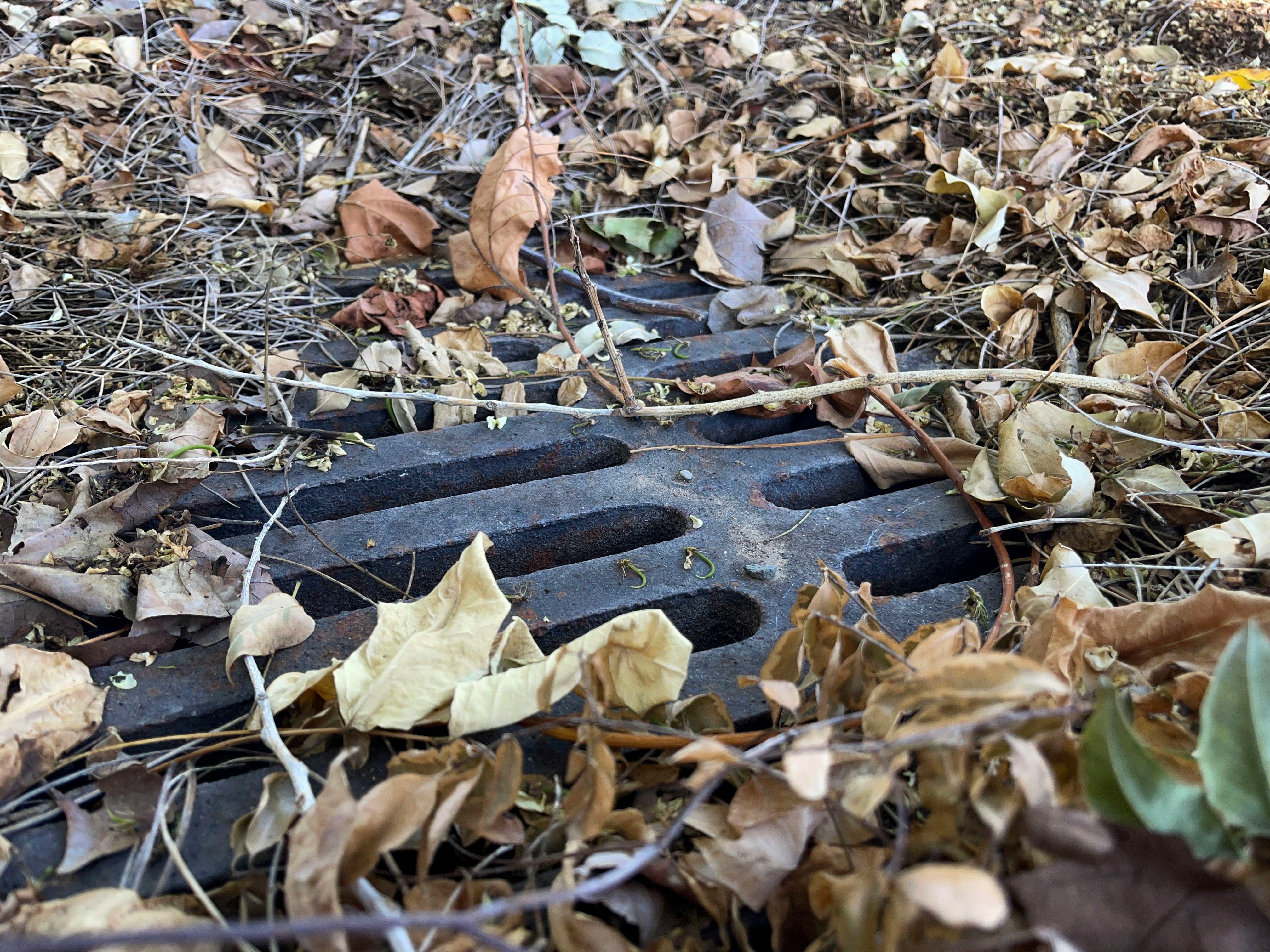
Common problems with outdoor drainage include grates blocked with leaves and debris, which reduce drainage efficiency and can lead to standing water. Left uncleared, this standing water creates pressure on underground pipework and can trigger surface flooding.
Do Chemical Drain Cleaners Actually Work?
Chemical drain cleaners can shift a minor grease blockage or slow-draining sink, but they are not an effective maintenance tool and can damage older pipework. For preventive maintenance, they are neither necessary nor advisable.
Standard chemical drain cleaners work by generating heat through a chemical reaction, which dissolves soft organic material. They work on fresh, light grease build-up. They don’t work on compacted material, tree roots, or structural blockages. And they can cause real problems with older pipe materials.
Clay pipes are brittle and susceptible to cracking, particularly under ground movement and thermal stress. Pouring a caustic chemical into a clay drain risks cracking already-weakened pipe sections. PVC pipes fare better, but repeated use of strong chemicals still degrades joint seals over time.
Biological drain cleaners are a better option for routine maintenance. These contain natural bacteria or enzymes that break down organic material inside pipes, working gradually rather than aggressively, and are better suited to preventative maintenance or treating minor build-up than clearing severe blockages.
For most households, regular hot water flushes and good disposal habits are more effective than any chemical product. Monthly hot water flushes are a simple and effective way to clear minor build-up and keep pipes unobstructed.
What Seasonal Drain Maintenance Should I Do Each Year?
A four-season maintenance calendar keeps outdoor drainage functioning year-round and reduces emergency call-outs. Each season brings a specific maintenance task.
Spring
Check all outdoor drains, driveway gullies, and downpipe outlets after winter. Remove debris using gloves and a trowel, then flush with a bucket of water to confirm flow, and check drain covers for stability and fit, replacing any that are loose or broken. Inspect gutters where they meet downpipes, as blockages at this junction cause most overflow issues.
Summer
Cut back any vegetation growing close to outdoor drainage channels or inspection chambers. Tree roots seek moisture, and they will follow a drainage run if given the opportunity. Large trees with expansive root systems can extend several metres, reaching and infiltrating pipes even at a considerable distance from the tree. Keep root growth away from drainage lines wherever possible.
Autumn
Clear outdoor gullies before the main leaf fall. A blocked gully in October will handle heavy November and December rainfall very poorly. Check gutters and downpipes at this point too, and consider fitting a leaf guard if nearby trees drop significant volumes each year.
Winter
Keep an eye on inspection chamber covers during prolonged rainfall. Surface flooding from a blocked gully can pressurise underground connections. If water is pooling on the surface for more than a few hours after rain stops, the gully needs clearing.
Why Are Cornwall Properties at Higher Risk of Drain Problems?
Cornwall properties carry a higher base risk of drainage problems than the UK average, due to a combination of geological factors, older pipe stock, and rainfall volume.
Clay Pipe Systems
A large proportion of Cornwall’s older housing stock still uses clay drainage pipes. Clay pipes were originally made in short sections requiring multiple joints along a typical drain run, and each joint represents a potential entry point for tree roots or a point of failure as the ground shifts.
Clay is a brittle material. Ground movement, which occurs in Cornwall due to a mix of granite bedrock, clay subsoils, and coastal erosion, causes clay pipes to crack, sag, or become misaligned over time. Sagging pipes collect waste and debris, creating persistent blockages and reducing the efficiency of the drainage system.
Rainfall and Ground Conditions
Cornwall receives significantly more annual rainfall than most of England, driven by its Atlantic coast position. This places consistent pressure on surface drainage and soakaways. High water tables, particularly in low-lying areas and river valleys, can reduce the effectiveness of soakaway systems during wet periods, placing additional load on foul drainage networks.
Shillet rock (weathered slate) and clay subsoils, common across much of mid-Cornwall, retain moisture and shift seasonally. This ground movement adds stress to buried pipework that properties in more stable ground conditions don’t experience to the same degree.
Rural Pipe Networks
Many rural Cornwall properties operate private drainage networks, including septic tanks, treatment plants, and long pipe runs to main connections. These systems require more active maintenance than urban connections. Longer pipe runs mean more joints, more potential root entry points, and more distance between a blockage and any inspection access.
How Often Should I Have My Drains Professionally Inspected?
For most properties, a professional CCTV Drain Survey every two to three years is a sound maintenance interval. Older properties, those with mature trees in close proximity, or those with a history of recurring blockages benefit from annual inspections.
A CCTV Drain Survey uses a camera mounted on a flexible rod to inspect the internal condition of your drain runs in real time. It identifies root ingress, cracked or displaced pipes, partial blockages, and joint failures that no surface-level check can detect.
Getting a proper CCTV diagnostic rather than continuing to treat symptoms is advisable when you experience repeated blockages, slow drains across multiple fixtures, or unexplained smells from outside gullies, because treating symptoms without identifying the cause will not resolve an underlying structural problem.
The survey produces a video record, which is useful for landlords and property managers who need documented evidence of drainage condition. It also provides the diagnosis needed before any pipe relining or repair work begins, ensuring the right fix is applied to the right problem.
For properties purchasing a home in Cornwall, a pre-purchase CCTV drainage survey is advisable. Drainage defects don’t appear on standard surveys, and clay pipe defects in particular are expensive to repair after purchase.
How Clear Stream Handles Drain Maintenance in Cornwall
Clear Stream engineers deliver drain maintenance across Cornwall and Devon, covering both routine scheduled visits and full diagnostic inspections for properties with complex or recurring drainage problems.
The starting point on any maintenance visit is a root cause assessment. Clearing a blockage without understanding why it formed means it will return. Our engineers identify the source, whether it’s a build-up issue, a structural defect, or a behaviour pattern, and advise accordingly.
For active blockages, High-Pressure Jetting clears pipes fully rather than poking a hole through the obstruction. The process scours the internal pipe wall, removing grease, scale, and sediment that rods can’t reach. It’s also the preparation step before any pipe relining work, ensuring the surface is clean before the liner is inserted.
Where the inspection reveals a structural defect, such as a cracked clay pipe or root-damaged joint, we provide a fixed-price quote before any work begins. Repairs backed by our 5-Year Guarantee are completed without excavation in most cases, using no-dig relining techniques that protect gardens and driveways.
For landlords and property managers maintaining Cornwall rental stock, we provide documented inspection reports and can schedule repeat visits on a maintenance plan basis.
Our engineers cover all Cornwall towns including Truro, Falmouth, Bodmin, Newquay, St Austell, Penzance, Launceston, and Bude, as well as Devon. There are no call-out fees, and response on emergency callouts averages 1 to 2 hours.
Conclusion
Drain maintenance doesn’t need to be complicated. Watch what goes down your drains, clear outdoor gullies each season, and arrange a professional CCTV inspection every two to three years. Those three habits will stop the majority of blockages before they start.
In Cornwall, where clay pipe systems, high rainfall, and ground movement create conditions that accelerate drainage wear, the inspection step matters more than most. A camera survey costs far less than an emergency repair, and it tells you exactly what’s happening inside your pipes rather than leaving you guessing.
If you’re dealing with a recurring blockage, slow drainage, or you simply can’t remember the last time your drains were inspected, call Clear Stream on 01872 222555. There are no call-out fees, no hidden charges, and a fixed-price quote before any work begins. Get in touch with our team today.
