

 Blocked Drains
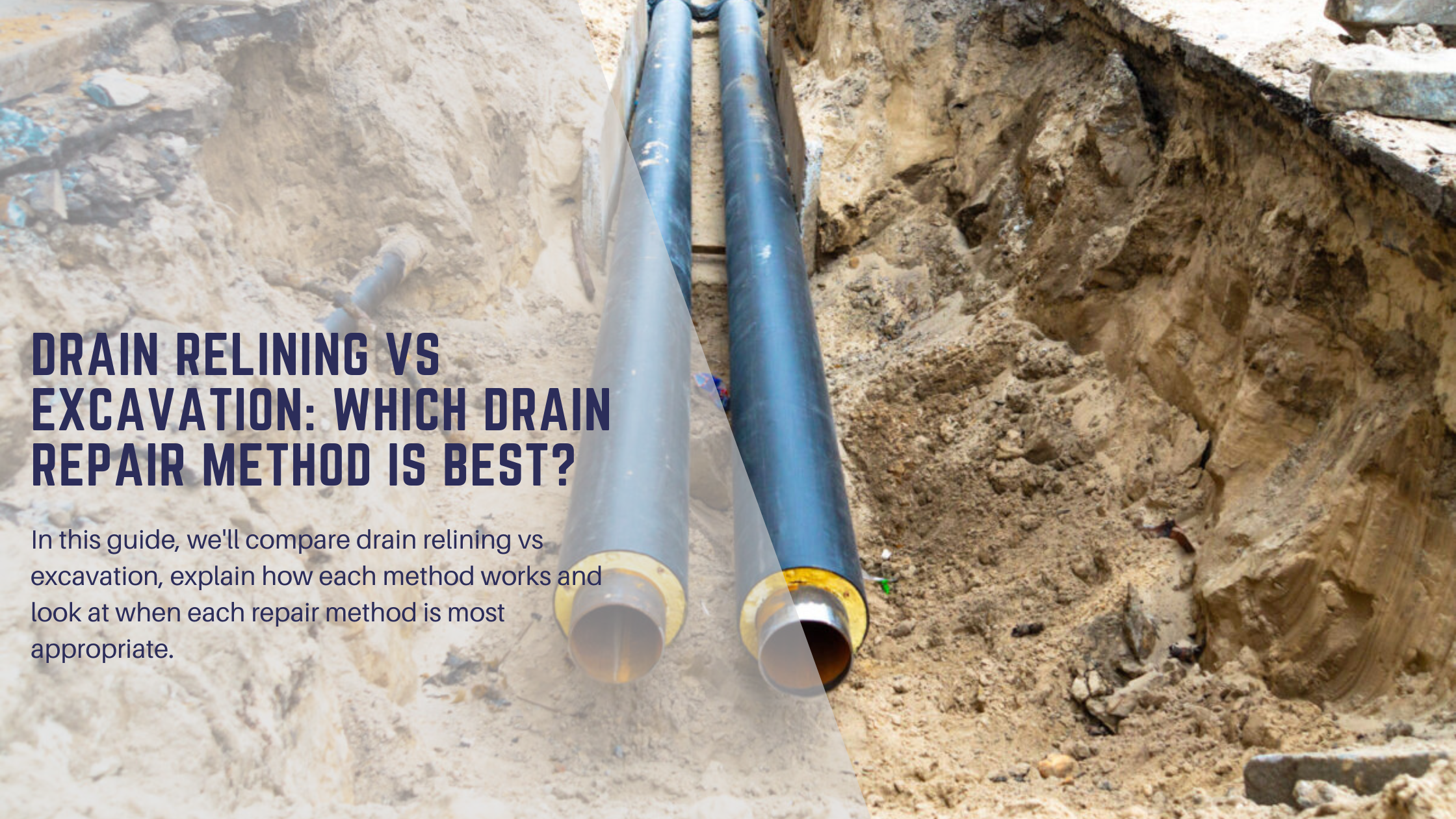
Drain Relining vs Excavation: Which Drain Repair Method Is Best?
If you have a damaged, cracked or leaking drain, there are several ways it can potentially be repaired.
Two of the most common options are drain relining and drain excavation.
But what’s the difference between them, and which is better?
In many situations, drain relining can repair a damaged pipe without digging up your garden, driveway or property. However, it isn’t suitable for every type of drainage problem. Sometimes excavation and pipe replacement is the better option.
In this guide, we’ll compare drain relining vs excavation, explain how each method works and look at when each repair method is most appropriate.
What Is Drain Relining?
Drain relining is a trenchless method of repairing damaged underground drainage pipes.
Instead of digging up the entire damaged section, a specialist liner is installed inside the existing pipe.
The liner forms a new pipe within the old one, effectively sealing cracks, holes and damaged joints.
This means the existing drainage pipe can often be repaired without excavating the surrounding ground.
Drain relining can be suitable for certain problems including:
- Cracked pipes
- Small holes
- Leaking joints
- Minor structural damage
- Root-damaged sections
- Some damaged underground pipework
The suitability of relining depends on the condition, size, shape and accessibility of the existing pipe.
A CCTV drain survey is often used first to determine whether relining is appropriate.
What Is Drain Excavation?
Drain excavation involves physically digging down to the damaged section of pipe.
The damaged pipe can then be exposed, removed and replaced or repaired.
Excavation may be necessary when a pipe is:
- Completely collapsed
- Severely damaged
- Misaligned
- Too badly deformed to reline
- Inaccessible to relining equipment
- In need of replacement rather than repair
Once the damaged pipe has been repaired or replaced, the excavation is backfilled.
Depending on where the drain is located, this could involve removing sections of:
- Garden
- Driveway
- Patio
- Tarmac
- Concrete
- Flooring
This can make excavation more disruptive than trenchless drain relining.
Drain Relining vs Excavation
The main difference is simple:
Drain relining repairs the existing pipe from inside.
Excavation exposes the pipe so it can be repaired or replaced directly.
| Drain Relining | Drain Excavation |
|---|---|
| Trenchless repair | Requires excavation |
| Minimal disruption | Can be disruptive |
| Existing pipe remains in place | Damaged pipe can be removed |
| Often quicker | Can take longer |
| Less damage to gardens and driveways | Ground may need reinstating |
| Suitable for certain cracks and damage | Suitable for severe structural damage |
| Usually requires CCTV assessment | Allows direct access to pipe |
Neither method is automatically better.
The right solution depends on the condition of the drainage system.
Is Drain Relining Better Than Excavation?
In the right circumstances, drain relining can have significant advantages over excavation.
Because there is usually no need to dig a large trench, there can be considerably less disruption to the property.
For example, if a damaged pipe runs underneath a driveway, traditional excavation could mean removing part of the driveway to reach the pipe.
With suitable pipework, relining may allow the problem to be repaired from an existing access point.
However, relining isn’t a universal solution.
If the pipe has completely collapsed or is severely deformed, excavation and replacement may be necessary.
Advantages of Drain Relining
Less Disruption
The biggest advantage is that extensive excavation may not be necessary.
This can be particularly useful when drainage pipes run underneath:
- Driveways
- Patios
- Gardens
- Conservatories
- Extensions
- Roads
- Commercial premises
Faster Repairs
Because there is less excavation and reinstatement work, drain relining can often be completed more quickly than traditional excavation.
The exact timescale depends on the condition and length of the damaged pipe.
No Large Trench
Traditional drain repairs can require significant excavation.
Drain relining avoids the need to dig up the entire route of the damaged pipe.
Less Damage to Property
Avoiding excavation can mean less disruption to landscaping, paving, driveways and other surfaces.
Can Seal Cracks and Leaks
A correctly installed liner can create a continuous new internal surface within the existing pipe.
This can seal certain cracks, holes and leaking joints.
Disadvantages of Drain Relining
Drain relining isn’t suitable for every drainage problem.
Potential limitations include:
- Severely collapsed pipes
- Pipes that are badly deformed
- Certain inaccessible drainage systems
- Pipes with significant structural movement
- Situations where the existing pipe cannot accommodate a liner
The pipe normally needs to be accessible and in a suitable condition for the liner to be installed.
A CCTV drain survey can help determine whether relining is technically possible.
Advantages of Drain Excavation
Although excavation is more disruptive, it remains an important method of repairing damaged drainage.
Suitable for Severely Damaged Pipes
If a drain has completely collapsed, replacing the damaged section may be the most appropriate solution.
Direct Access to the Problem
Excavation gives engineers direct access to the damaged pipe.
This allows the pipe to be removed, replaced and inspected directly.
Can Correct Other Problems
Excavation may also be required where the drainage system has other issues, such as incorrect pipe positioning or serious structural movement.
Disadvantages of Drain Excavation
The biggest drawback is disruption.
Depending on the location of the pipe, excavation can involve:
- Digging up gardens
- Removing paving
- Breaking concrete
- Removing driveway surfaces
- Disrupting landscaping
- Reinstating the area afterwards
Excavation can also take longer because the ground needs to be opened, the repair completed and the surface reinstated.
How Do You Know Which Drain Repair You Need?
You shouldn’t normally have to decide between relining and excavation yourself.
A professional drainage engineer can assess the condition of the pipe and recommend the most appropriate repair.
One of the most useful tools for this is a CCTV drain survey.
A camera inspection can identify:
- Cracks
- Holes
- Tree roots
- Collapsed sections
- Displaced joints
- Pipe deformation
- Heavy deposits
- Other structural problems
The CCTV footage can help determine whether the pipe is suitable for relining or whether excavation and replacement is required.
Can Tree Root Damage Be Repaired With Drain Relining?
In some circumstances, yes.
Tree roots can enter drainage pipes through cracks, damaged joints and other weaknesses.
The roots may then continue growing inside the pipe and cause repeated blockages.
Depending on the condition of the pipe, the roots may first need to be removed and the pipe cleaned before a liner is installed.
Relining can then seal the damaged section and help prevent roots from re-entering through the repaired area.
However, the exact solution depends on the extent of the root damage and the condition of the pipe.
Is Drain Relining Cheaper Than Excavation?
It can be, but there isn’t a single price that applies to every drainage repair.
The overall cost depends on factors including:
- Length of damaged pipe
- Pipe diameter
- Depth of the pipe
- Location
- Accessibility
- Extent of damage
- Type of liner required
- Amount of excavation required
- Ground reinstatement
Drain relining can reduce costs associated with excavation and reinstatement, particularly where a damaged pipe is located underneath a driveway, patio or other expensive surface.
However, excavation may still be the most cost-effective option where the damaged section is short and easily accessible.
The cheapest repair method isn’t necessarily the best one. The priority should be choosing a repair that properly resolves the underlying problem.
How Long Does Drain Relining Last?
The lifespan of a drain liner depends on the product used, installation quality, pipe conditions and other factors.
A professionally installed liner is designed to provide a long-term repair.
However, you should ask your drainage company about the particular lining system being proposed, including its expected lifespan and any warranty provided.
Does Drain Relining Require Digging?
One of the main benefits of drain relining is that it is a trenchless repair method.
In suitable circumstances, the liner can be installed through existing drainage access points without excavating the entire damaged section.
There may still be a need for limited excavation if access to the pipe is unavailable or another part of the drainage system requires attention.
What Happens During Drain Relining?
Although the exact process varies, drain relining generally involves several stages.
1. CCTV Inspection
The pipe is inspected using a drainage camera to establish the location and extent of the damage.
2. Drain Cleaning
The pipe may need to be cleaned using specialist equipment before the liner can be installed.
3. Preparation
The damaged section is prepared so the liner can be installed correctly.
4. Liner Installation
A specialist liner is inserted into the existing pipe.
5. Curing
The liner is cured so it forms a solid new internal pipe surface.
6. Final Inspection
A CCTV camera can be used to inspect the completed repair and confirm that the drainage system is functioning correctly.
When Is Excavation the Better Option?
Drain excavation may be recommended when:
- The pipe has completely collapsed
- The pipe is severely deformed
- The existing pipe cannot be relined
- There is major structural damage
- The drainage system needs repositioning
- A section needs to be completely replaced
- Access makes relining impractical
Although excavation is more disruptive, sometimes it’s the most reliable way to permanently resolve a serious drainage problem.
Drain Relining vs Excavation: Which Should You Choose?
There is no single answer.
Drain relining is often worth considering when the existing pipe is structurally suitable for lining and you want to minimise disruption.
Excavation may be necessary when the pipe is severely damaged, collapsed or unsuitable for relining.
The best way to decide is to inspect the drainage system first.
Rather than choosing a repair method based solely on price, make sure the underlying problem has been correctly diagnosed.
Drain Relining and Repairs in Cornwall
Clear Stream Drainage provides professional drainage services across Cornwall, including CCTV drain surveys, drain repairs, drain jetting and drain relining.
If you have recurring blockages, suspected damaged pipework or a collapsed drain, we can inspect the drainage system and help determine the most appropriate repair.
Our drainage services can help with:
- Cracked drains
- Collapsed pipes
- Tree root damage
- Leaking joints
- Recurring blockages
- Underground pipe damage
- Drain relining
- Traditional drain repairs
A CCTV drain survey can often be used to identify the problem before repair work begins, helping avoid unnecessary excavation.
Think your drain needs repairing? Don’t dig first — find out what’s actually wrong.
01872 222555
clearstreamdrainage.co.uk
Frequently Asked Questions
What is the difference between drain relining and excavation?
Drain relining repairs a damaged pipe from inside without normally requiring extensive excavation. Excavation involves digging down to the damaged pipe so it can be repaired or replaced directly.
Is drain relining better than replacing a drain?
It depends on the condition of the pipe. Relining can be an excellent option for certain cracks, leaks and structural damage, while severely collapsed or damaged pipes may need to be replaced.
Is drain relining cheaper than excavation?
It can be, particularly when excavation would involve removing and reinstating expensive surfaces such as driveways or patios. However, the cost depends on the individual drainage system.
How do I know if my drain can be relined?
A CCTV drain survey can help determine whether the pipe is suitable for relining. The size, shape, accessibility and structural condition of the pipe all need to be considered.
How long does drain relining last?
A properly installed drain liner is designed as a long-term repair. The expected lifespan depends on the lining system, installation and condition of the drainage system.
Can tree roots be repaired with drain relining?
In suitable circumstances, yes. Root intrusion may need to be removed and the pipe cleaned before relining. The condition of the pipe will determine whether relining is appropriate.
