

 blog
blogTL;DR: A private drain is the section of pipe inside your property boundary that serves only your building. A lateral drain is the same pipe once it crosses that boundary and runs on towards the public sewer. You are responsible for the private drain. South West Water is responsible for the lateral drain. Establishing where the boundary sits is what decides who pays for the repair.
The difference between a lateral drain and a private drain comes down to one line: your property boundary. Get that line wrong and you could fund a repair that was never yours to pay for. Or you could sit waiting for the water company to attend a blockage they have no duty to touch.
The pipes look identical. Same clay, same bore, same wastewater. Legal ownership changes completely the moment the pipe leaves your land.
Since October 2011, the rules have been far clearer than most property owners realise. Water and sewerage companies took on the majority of pipework sitting outside private boundaries, and they did it without asking anyone to sign a thing. Plenty of homeowners and landlords across Cornwall still pay for drainage work they are entitled to have carried out at no cost.
This guide covers what each type of drain is, who owns and pays for what, how the 2011 transfer changed things, and how to establish exactly where your responsibility ends.
What Is a Private Drain?
A private drain is a pipe that carries wastewater from a single property to the sewer and sits within that property’s boundary. It serves one building only. In England, the property owner owns the private drain and is responsible for repairing, maintaining and unblocking it.
The Water Industry Act 1991 defines a drain as a pipe used for the drainage of one building, or of buildings and yards within the same curtilage. Curtilage is the legal term for the land your building sits on and the ground that belongs with it, which for most homes is the area inside the garden fence or wall.
Your private drainage typically includes:
- Underground foul and surface water pipes running beneath your garden, drive or yard
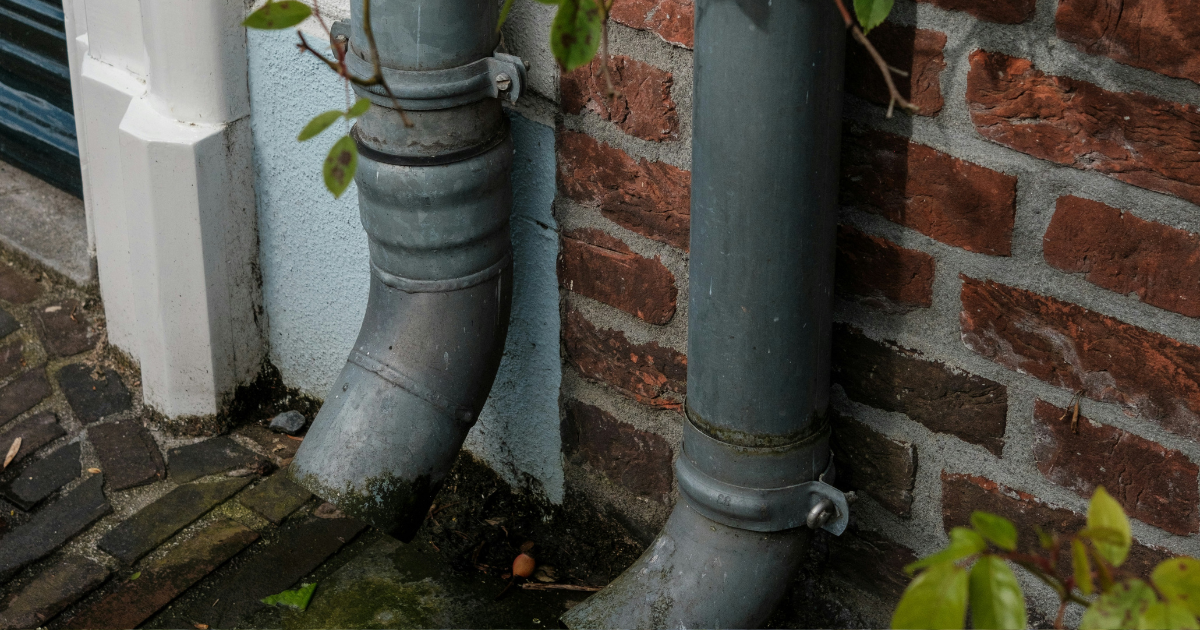
- Gutters, downpipes and gullies attached to the property
- Inspection chambers and manholes located inside your boundary
- Any pipework inside the building itself
If you rent the property out, the drainage is still yours as the freeholder. Landlords and letting agents carry the repair liability, not the tenant, unless the tenancy agreement says otherwise and the damage was caused by misuse.
What Is a Lateral Drain?
A lateral drain is the section of a property’s drain that runs beyond the boundary of that property and connects to the public sewer. It still serves one building, but it sits on land that is not yours: a neighbour’s garden, a pavement, a verge, or the highway. In the vast majority of cases, the water company owns and maintains it.
South West Water sets this out plainly. Drains become lateral drains when they extend past the boundary of the property they serve, and those sections belong to South West Water.
Two points catch people out.
First, a lateral drain can run under your land. If your neighbour’s drain crosses your garden on its way to the sewer, that pipe is a lateral drain serving them, and it is not your responsibility even though it is buried in your lawn.
Second, the age of the connection matters. Pipes connected to the public sewer before 1 July 2011 transferred automatically. Anything built and connected after that date is only adopted where a Section 104 adoption agreement is in place with the sewerage undertaker. New-build estates are the common exception, and the drainage on some of them remains private.
Lateral Drain vs Private Drain: The Key Differences
A private drain sits inside your boundary and belongs to you. A lateral drain sits outside your boundary and belongs to the water company. Both serve a single property, both carry the same wastewater, and both fail in the same ways. Ownership is the only thing that separates them.
| Feature | Private Drain | Lateral Drain |
|---|---|---|
| Location | Inside the property boundary | Outside the property boundary, often under a pavement, road or neighbouring garden |
| Serves | One property | One property |
| Owner | The property owner | South West Water (in Cornwall and Devon) |
| Who pays for repairs | The property owner | South West Water |
| Who to call first | A drainage contractor | South West Water |
| Typical defects | Root ingress, fat build-up, cracked clay joints, collapse | Root ingress, displaced joints, collapse under highway loading |
A third category sits alongside both. A sewer is a pipe carrying waste from more than one property, and public sewers are the water company’s responsibility. A small number of sewers remain private, which we cover below.
Who Is Responsible for a Blocked Drain?
The property owner is responsible for blockages and repairs in the private drain inside their boundary. The water company is responsible for lateral drains beyond the boundary and for public sewers serving multiple properties. The position of the blockage decides who pays, not the position of the property.
What You Are Responsible For
- Blockages in pipework inside your boundary
- Structural defects in your private drain, including cracks, root damage and collapse
- Gutters, downpipes and gullies on the building
- Drainage serving a single property that discharges to a septic tank rather than a sewer
What South West Water Is Responsible For
- Lateral drains outside your boundary that connect your property to the public sewer
- Public sewers, wherever they run, including where they cross your garden
- Shared sewers serving two or more properties that were connected before 1 July 2011
- Adopted pumping stations serving multiple properties
South West Water will investigate the cause of a sewerage problem free of charge. If the fault turns out to sit on your side of the boundary, the work becomes yours to arrange, and that is the point at which most people call us for drain unblocking in Cornwall. There is no call-out fee, and we are on site within one to two hours anywhere in the county.
Private and Unadopted Sewers
Some drainage systems never transferred into public ownership. Pipework contained entirely within a single curtilage, such as a caravan park, a retail estate or a block of flats sharing one site, stayed private. Where several owners share a private sewer, the cost of maintaining and repairing it is shared between them.
Cornwall has a good number of these arrangements, particularly on converted farm buildings and holiday parks. If your property sits on one, the water company has no duty to attend.
How the 2011 Private Sewer Transfer Changed Drain Ownership
On 1 October 2011, ownership of most private sewers and lateral drains in England and Wales passed to water and sewerage companies. Property owners who had been liable for pipework running under roads and neighbouring land were released from that liability, with no paperwork to sign and no work required to bring the pipes up to standard.
The change was made by The Water Industry (Schemes for Adoption of Private Sewers) Regulations 2011, which came into force on 1 October 2011. Any private sewer or lateral drain communicating with a public sewer immediately before 1 July 2011 transferred to the relevant sewerage undertaker.
It was the largest change in sewer ownership since 1989. Most property owners never noticed it happen.
What did not transfer:
- Private drains inside property boundaries
- Septic tanks, cesspits and private treatment plants
- Drainage systems contained within a single curtilage
- Pipes owned by railway undertakers
- Sewers and lateral drains built and connected after 1 July 2011 with no Section 104 agreement
Private pumping stations serving two or more properties were given a longer window, with water companies required to adopt qualifying stations by October 2016.
If your property runs on a septic tank, none of the transfer applies to you. Everything from the building to the tank and out into the drainage field is private, which is why septic tank maintenance sits entirely with the owner.
How Do You Find Out Where Your Drain Ends and the Lateral Drain Begins?
The property boundary is the dividing line, but title deeds rarely show pipe runs and inspection chambers are often buried under patios or driveways. The reliable method is a CCTV Drain Survey read alongside the public sewer records held by the water company.
Three steps establish ownership before anyone digs.
- Request the sewer records. South West Water holds a public sewer map showing adopted sewers and lateral drains near your property. A drainage and water search, ordered during conveyancing, contains the same information.
- Locate the boundary and the chambers. The last inspection chamber inside your boundary is the usual marker. Downstream of it, the pipe becomes a lateral drain.
- Survey the run. A CCTV Drain Survey traces the pipe, measures the distance from a fixed reference point, and pinpoints the defect to the metre.
That last point is what settles the argument. A camera survey produces a recorded, dated report showing the exact location and nature of the fault. If the defect is 4 metres downstream of the boundary, the water company owns it. If it is 2 metres upstream, it is yours, and the survey tells you whether it needs drain relining or full excavation before you commit to a cost.
Landlords and property managers get a second benefit here: documentation. A survey report is evidence for an insurer, a tenant, or a water company disputing liability.
What This Means for Property Owners in Cornwall
Cornwall’s housing stock and ground conditions make drain ownership harder to pin down than in most of England. Terraced streets in Falmouth and Truro often sit on Victorian clay runs that were laid long before anyone recorded them. Rural properties frequently have no public sewer connection at all, which means no lateral drain exists.
Four local factors change how this plays out.
Ageing Clay Pipework
Much of Cornwall’s older housing still drains through clay pipes with mortar joints. Root ingress and displaced joints are the two defects we find most often. Ownership decides whether you fund the repair or the water company does, and on a 30-metre run the boundary may fall anywhere along it.
Granite and Shillet Ground
Excavation in Cornish subsoil is slow and expensive. Establishing ownership and pipe condition with a camera first, before breaking ground, is the difference between a targeted no-dig repair and a large hole in someone else’s driveway.
High Coastal Water Tables
Groundwater infiltration through cracked joints is common in coastal Cornwall, and it degrades pipes on both sides of the boundary. A defect that starts in a lateral drain will pull silt and root growth back up into private pipework.
Holiday Lets and Second Homes
Remote owners and managing agents deal with blockages at a distance, often through a caretaker. Knowing in advance which side of the line a recurring blockage sits on saves days of back and forth every time it happens.
One more thing worth knowing. If you are planning an extension, you cannot build over or within 3 metres of a public sewer or lateral drain without permission. South West Water’s build-over guidance confirms that consent is required, and a CCTV survey is normally part of the application.
Know Where the Line Sits Before You Pay
The distinction is simple once you see it. Inside your boundary, the pipe is a private drain and it is yours. Outside your boundary, the pipe is a lateral drain and it belongs to South West Water. The 2011 regulations shifted that liability away from property owners, and a large number of people in Cornwall have never taken advantage of it.
Three takeaways:
- Locate the boundary before you authorise any drainage work
- Report anything you suspect is beyond it to South West Water first
- Use a CCTV Drain Survey to prove where the defect sits, then act on the evidence
If you have a blockage, a recurring problem, or a dispute over who pays, our engineers will diagnose the root cause and tell you exactly where the fault lies. No call-out fee, a fixed-price quote before work starts, a 5-year guarantee on repairs, and an engineer with you within one to two hours anywhere in Cornwall. Call us today on 01872 222555.
Frequently Asked Questions
Is a Lateral Drain the Same as a Public Sewer?
No. A lateral drain serves one property and runs from that property’s boundary to the sewer. A public sewer collects wastewater from two or more properties. Both are owned and maintained by the water company, so from a cost perspective the practical outcome for a homeowner is the same.
Who Pays for a Blocked Lateral Drain?
South West Water pays. A lateral drain sits outside your boundary and is owned by the sewerage undertaker, so blockages and repairs in that section are theirs to fund. Report the problem to South West Water first. If they investigate and find the fault is inside your boundary, the cost returns to you.
Can I Build Over a Lateral Drain?
Not without permission. Building over or within 3 metres of a public sewer or lateral drain requires consent from South West Water, and this applies regardless of whether your plans have already been approved by the local authority. A CCTV Drain Survey is normally required as part of the build-over application, and this is a common reason our engineers are called out.
Do I Have a Lateral Drain if I Have a Septic Tank?
No. A lateral drain exists only where a property connects to the public sewer network. Properties on a septic tank, cesspit or package treatment plant have no connection to a public sewer, so every metre of pipework from the building to the tank and drainage field is private and owned by the property owner.
What Happens if a Drain Is Shared With My Neighbour?
A pipe serving two or more properties is a sewer, not a drain. Most shared sewers that were connected to the public network before 1 July 2011 transferred to the water company in October 2011, making South West Water responsible. A small number of private sewers were never adopted, and where that is the case, the owners of all properties served by the pipe share the cost of repairs.
How Do I Find Out if My Drain Has Been Adopted?
Ask South West Water for an extract of the public sewer map, which shows adopted sewers and lateral drains near your property. A drainage and water search ordered through a conveyancer gives you the same records. Where the map is unclear or the pipework is unrecorded, a CCTV Drain Survey traced from your inspection chamber to the connection point will establish the run on the ground.
Does the Water Company Charge to Investigate?
No. South West Water investigates the cause of a sewerage problem free of charge. If the investigation shows the fault is inside your boundary, you then need to arrange the repair yourself with a drainage contractor. Clear Stream Drainage Solutions charges no call-out fee and provides a fixed-price quote before any work begins.
