

 blog
blogTL;DR: A CCTV drain survey uses a waterproof camera to inspect drainage pipes from the inside, giving engineers a precise view of cracks, blockages, root intrusion, and structural defects. It replaces guesswork with evidence. If you’re buying a property, dealing with a recurring blockage, or planning building work near drains, a survey is the logical first step before spending money on a fix.
Drainage problems rarely announce themselves clearly. A slow-draining sink, a patch of soggy grass, or a drain that blocks again six weeks after it was cleared: all of these point to something wrong inside the pipe, but none of them tell you what. That’s where a CCTV drain survey comes in.
A CCTV drain survey is the standard diagnostic tool for drainage problems across the UK. It gives engineers a real-time view of what’s happening inside your pipes without excavation, without guesswork, and without pulling up your driveway to find out. In Cornwall, where clay pipes, granite bedrock, and high seasonal rainfall all put drainage systems under above-average stress, it’s often the fastest route to a reliable answer.
This guide explains exactly what a CCTV drain survey is, how it works, what it costs, and when you actually need one.
What Is a CCTV Drain Survey?
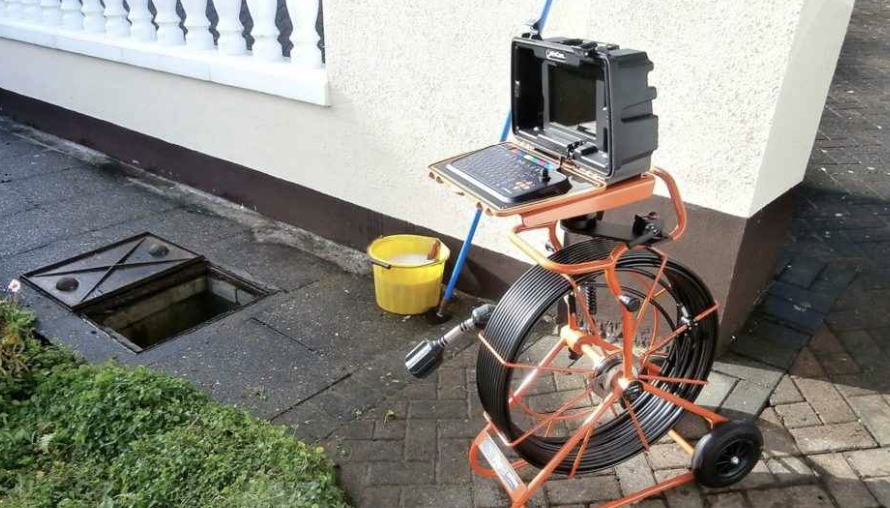
A CCTV drain survey is an internal pipe inspection that uses a waterproof camera mounted on a flexible rod or crawler unit to travel through your drainage system. The camera transmits live footage to a monitor, and the engineer records the full survey for later review and reporting.
The method is non-invasive. No digging, no guesswork, no speculative repairs. The camera shows the inside of the pipe in real time: its material, its condition, any defects, and where those defects sit relative to the surface above.
Here’s what the process looks like from start to finish:
- The engineer identifies the appropriate access point, usually an inspection chamber or manhole.
- The camera is introduced into the pipe and guided through the drainage run.
- Live footage is monitored on-site, with the engineer narrating or tagging defects as they appear.
- The survey is recorded in full. A written report follows, identifying every defect, its location (measured in metres from the access point), and a recommended action.
The camera used is a closed-circuit television unit designed for wet, confined environments. That’s where the name comes from. The footage is typically stored digitally and can be shared with homeowners, insurers, solicitors, or local authorities as required.
What Can a CCTV Drain Survey Find?
A CCTV drain survey can identify almost any defect or obstruction inside a drainage pipe, provided the pipe is accessible and the blockage isn’t so severe that the camera can’t pass through.
Common findings include:
- Cracks and fractures in clay, concrete, or plastic pipework, often caused by ground movement, tree root pressure, or simple age
- Root intrusion, where tree and shrub roots have entered the pipe through a joint or crack and begun obstructing flow
- Displaced or collapsed joints, particularly common in older clay pipe systems laid with mortar joints that have degraded over time
- Scale and grease build-up on pipe walls, which narrows the bore and slows drainage
- Structural collapse or deformation, where the pipe has partially or fully failed under load
- Incorrect falls, where sections of pipe are laid at the wrong gradient so waste doesn’t flow freely
- Misconnections, where surface water and foul water drainage have been incorrectly combined
In Cornwall, a few defects come up more regularly than in other parts of the country. The county sits on a mixture of clay soils and granite bedrock, and older properties often still have clay pipe drainage laid decades ago. Clay joints fail gradually. Root intrusion from mature trees and hedgerows is common on rural properties. And on coastal sites, ground movement from erosion or shifting subsoils can displace pipes that might otherwise last indefinitely.
A survey report will categorise defects by severity, giving you a clear basis for deciding what needs fixing now and what can be monitored.
When Do You Actually Need a CCTV Drain Survey?
A CCTV drain survey is the right call any time you need to know the condition of a drainage system before making a decision, spending money, or taking on legal responsibility for a property.
The most common situations are:
Before buying a property.
A standard conveyancing survey doesn’t inspect the drainage system. A pre-purchase CCTV survey tells you if you’re buying a house with £8,000 of drainage problems that the seller doesn’t know about (and may not be obliged to disclose). It’s a standard due diligence step for buyers of older properties, rural properties with private drainage, and anything in a high-risk flood zone. (Note: the liability and disclosure obligations in property sales are subject to legal interpretation. Clients should verify their position with a solicitor before publishing content referencing seller disclosure duties.)
After a recurring blockage.
If a drain blocks once, it might just be grease or a foreign object. If it blocks again within a few months, something structural is almost certainly causing it. A survey finds the root cause rather than clearing the symptom again.
Before building work near drainage.
Any extension, conservatory, or landscaping project that runs near existing drainage should include a survey first. Building regulations require you to protect existing drainage runs, and you need to know where they are and what condition they’re in before work begins. (Note: building regulation requirements around drainage protection should be verified against current approved documents before publishing.)
When you can smell drains but can’t locate the source.
Sewer gas escaping into a property usually points to a cracked pipe or a failed seal somewhere in the run. A survey traces the source.
For insurance or legal purposes.
Drainage defects involved in subsidence claims, boundary disputes, or landlord-tenant disagreements are often documented using a CCTV survey report as evidence.
As part of a planned maintenance schedule.
Commercial properties and blocks of flats benefit from periodic surveys to catch deterioration before it becomes an emergency.
What Does a CCTV Drain Survey Cost?
The cost of a CCTV drain survey in the UK depends on the size of the drainage system, the length of pipe to be inspected, the number of access points, and where you are in the country.
Most residential surveys cover the drainage run from a single property to its connection with the sewer. Costs for this type of survey typically fall in the range of £100 to £350, with rural properties, longer runs, or difficult access sites sitting at the higher end.
A few things can push costs up:
- Multiple properties or a shared drainage system requiring several runs
- Manholes that need excavating to access because covers are buried or sealed
- Pipes with heavy blockage that require jetting before the camera can pass through
- Commercial sites with larger-diameter drainage infrastructure
The survey itself is usually quoted at a fixed price once the engineer has assessed the site or taken details from you. At Clear Stream, all work begins with a fixed-price quote before any engineer starts. No call-out fee, no surprise additions once the camera is in the ground.
Consider the cost against the alternative. An undetected cracked pipe can undermine foundations over years of slow water ingress. A missed root intrusion will block again. The cost of a survey is a fraction of what reactive repairs cost after a problem has progressed.
What Happens After the Survey?
The survey report is the most important deliverable. A good report gives you the information you need to make a decision, not just a list of things that need fixing.
A standard CCTV drain survey report includes:
- A written description of every defect found, referenced by its distance from the access point
- Footage or still images of each defect
- A drainage plan showing the layout of the inspected run
- Recommendations for remedial action, usually categorised by urgency
From there, the options depend on what the camera found.
If the pipes are in good condition, you have a documented record that’s useful for insurance, solicitors, and future maintenance planning.
If there are defects, the report supports a clear remediation plan. Minor scale or grease build-up is resolved with high-pressure jetting. Root intrusion typically requires cutting and then relining or patch repair. Cracked, displaced, or collapsed sections are candidates for drain pipe relining, a no-dig repair method that inserts a resin-impregnated liner inside the damaged pipe and cures it in place, effectively creating a new pipe within the old one without any excavation.
The survey takes the guesswork out of that decision. You know exactly what’s wrong, where it is, and what fixing it involves.
How Clear Stream Handles CCTV Drain Surveys Across Cornwall and Devon
Clear Stream’s engineers carry out CCTV drain surveys across the whole of Cornwall and into Devon, covering residential properties, commercial sites, and rural locations with private drainage systems.
Every survey is carried out by a trained drainage technician using high-resolution camera equipment. The footage is recorded in full, and a written report is produced covering every defect found, its location, and a recommended course of action.
A few things that matter in practice:
- No call-out fee. You pay for the survey, not for the engineer turning up.
- Fixed-price quote before work begins. You know the cost before the camera goes in the ground.
- If the survey identifies defects, the same engineer can advise on remediation options on-site, with relining and repair work covered by a 5-Year Guarantee.
- Coverage across Cornwall includes Truro, Falmouth, Newquay, Bodmin, Penzance, St Austell, and all surrounding areas, including rural and coastal sites where access conditions are more demanding.
Cornwall’s drainage stock includes a lot of older clay pipe systems, particularly in properties built before the 1960s. Clay degrades at joints over time. Ground movement from granite bedrock expansion and contraction affects pipe alignment in ways that don’t affect more geologically stable areas. Engineers who work across the county regularly recognise these failure patterns early, which shapes how the survey findings are interpreted and reported.
If the camera identifies a defect that can be resolved without digging, drain pipe relining is usually the most cost-effective and least disruptive route. Clear Stream carries out relining work as a direct follow-on from survey findings where required.
Conclusion
A CCTV drain survey is a precise diagnostic tool, not a precautionary measure. You need one when you’re making a decision that depends on knowing the condition of a drainage system: before buying a property, after a problem keeps returning, or ahead of building work that could disturb existing pipes.
Key points to take away:
- CCTV surveys are non-invasive. No digging, no guesswork.
- The report is the output that matters. It tells you what’s wrong, where it is, and what to do about it.
- In Cornwall, older clay pipe systems and varied ground conditions make drainage surveys particularly worthwhile.
To book a CCTV drain survey across Cornwall or Devon, call Clear Stream on 01872 222555. Fixed-price quotes, no call-out fees, and engineers who know the county’s drainage stock inside out.
Frequently Asked Questions
How long does a CCTV drain survey take?
A standard residential CCTV drain survey covering a single property’s drainage run typically takes between 45 minutes and 2 hours, depending on the size of the system and the number of access points. Larger or more complex systems take longer. You’ll receive a written report after the survey is complete, usually within 24 to 48 hours.
Will I get a copy of the footage from the survey?
Yes. A reputable drainage company will provide you with a full copy of the recorded footage alongside the written report. This is important if you need the survey as evidence for a house purchase, an insurance claim, or a building regulations application.
Can a CCTV survey be done on any type of drain?
CCTV surveys work on most standard drainage pipe sizes and materials, including clay, concrete, PVC, and cast iron. Very small pipes (under 75mm diameter) may not be accessible with standard camera equipment. Pipes with a severe blockage may need to be cleared by jetting before the camera can pass through.
Do I need a CCTV drain survey when buying a house?
A standard structural survey does not cover drainage. If the property is older, has a private drainage system such as a septic tank, is in a rural location, or has a history of drainage problems, a pre-purchase CCTV survey is a sensible investment. It can identify defects before you exchange contracts, giving you scope to renegotiate or request repairs.
What is the difference between a CCTV drain survey and drain jetting?
A CCTV drain survey is a diagnostic inspection. It tells you what’s inside the pipe. Drain jetting is a cleaning method that uses high-pressure water to clear blockages and debris. The two are often done together: jetting clears the pipe so the camera can inspect it properly, and the survey then identifies any underlying defects that caused the blockage in the first place.
Does a CCTV drain survey find collapsed pipes?
Yes. A collapsed or partially collapsed pipe is one of the more serious findings a CCTV survey can return. The camera will show the point of collapse and its extent, which informs whether relining is viable or whether excavation and replacement is the better option. Catching a partial collapse early, before it becomes a full failure, significantly reduces repair costs.
